
Journal · Eating out
When someone does not drink: splitting drinks fairly
Split food equally and drinks only among the people who drank, with a worked example including ++.
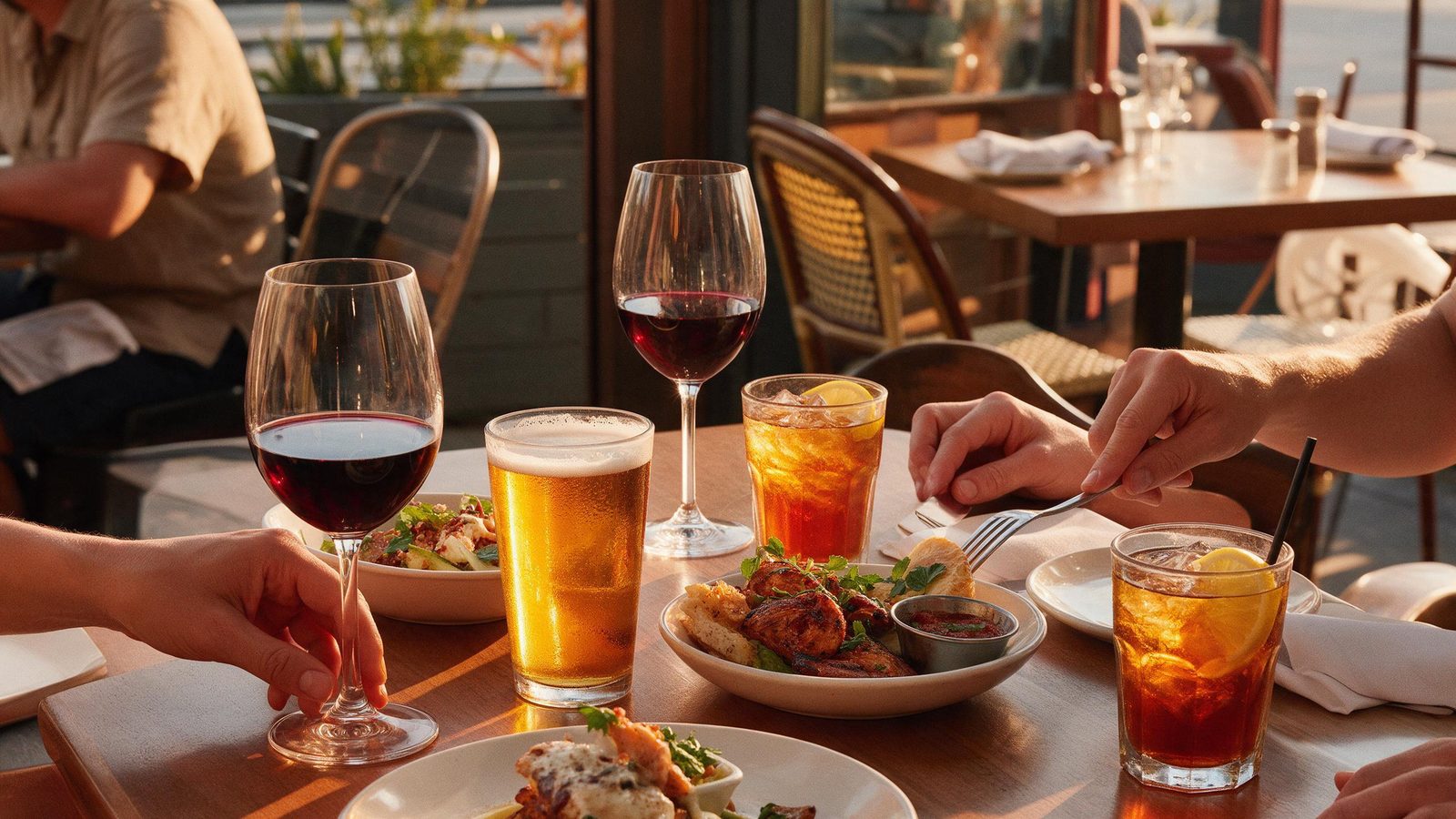
Wine and cocktails can easily cost more than the food. If one friend had iced tea and another had three glasses of wine, an equal split is not fair.
Split food and drinks separately
The cleanest method has two parts.
- Food is shared equally, especially if dishes were passed around.
- Drinks are paid by whoever ordered them, or shared only among the people who drank.
A worked example
Four friends share dinner in Singapore. The food comes to S$140. Two bottles of wine come to S$110, shared by three people. One friend has two iced teas at S$12.
- Food: S$140 ÷ 4 = S$35 each
- Wine: S$110 ÷ 3 = S$36.67 each for the three wine drinkers
- Iced tea: S$12 for the one who ordered it
Before charges, three people owe S$71.67 and one owes S$47. Add the 10% service charge and 9% GST by multiplying each by 1.199: S$85.93 for each wine drinker and S$56.35 for the iced-tea friend. Together that is S$314.14, the full bill.
Make it easy to speak up
Non-drinkers often stay quiet because they do not want to seem petty. A simple habit helps: whoever handles the bill asks "Shall we split drinks separately?" every time. It becomes normal, not personal.
Shared drinks
A jug of water or a pot of tea for the table is shared like food. Only alcohol and special drinks are split separately.
The same goes for big extras
The same idea works for anything one person orders that others do not: a lobster, a dessert platter, a bottle of champagne.
With Perpax
Perpax, coming soon from Goldmend Money, will let you tick who shared each item, so drinks only go to the people who had them.
General information, not financial or legal advice. Figures are examples. Check your receipt and official sources.
Next: How to remind a friend to pay you back, without the awkwardness