
Journal · Friends and money
Splitting with families: by household, not by person
Split by household, count children as half shares, and keep family meals relaxed.
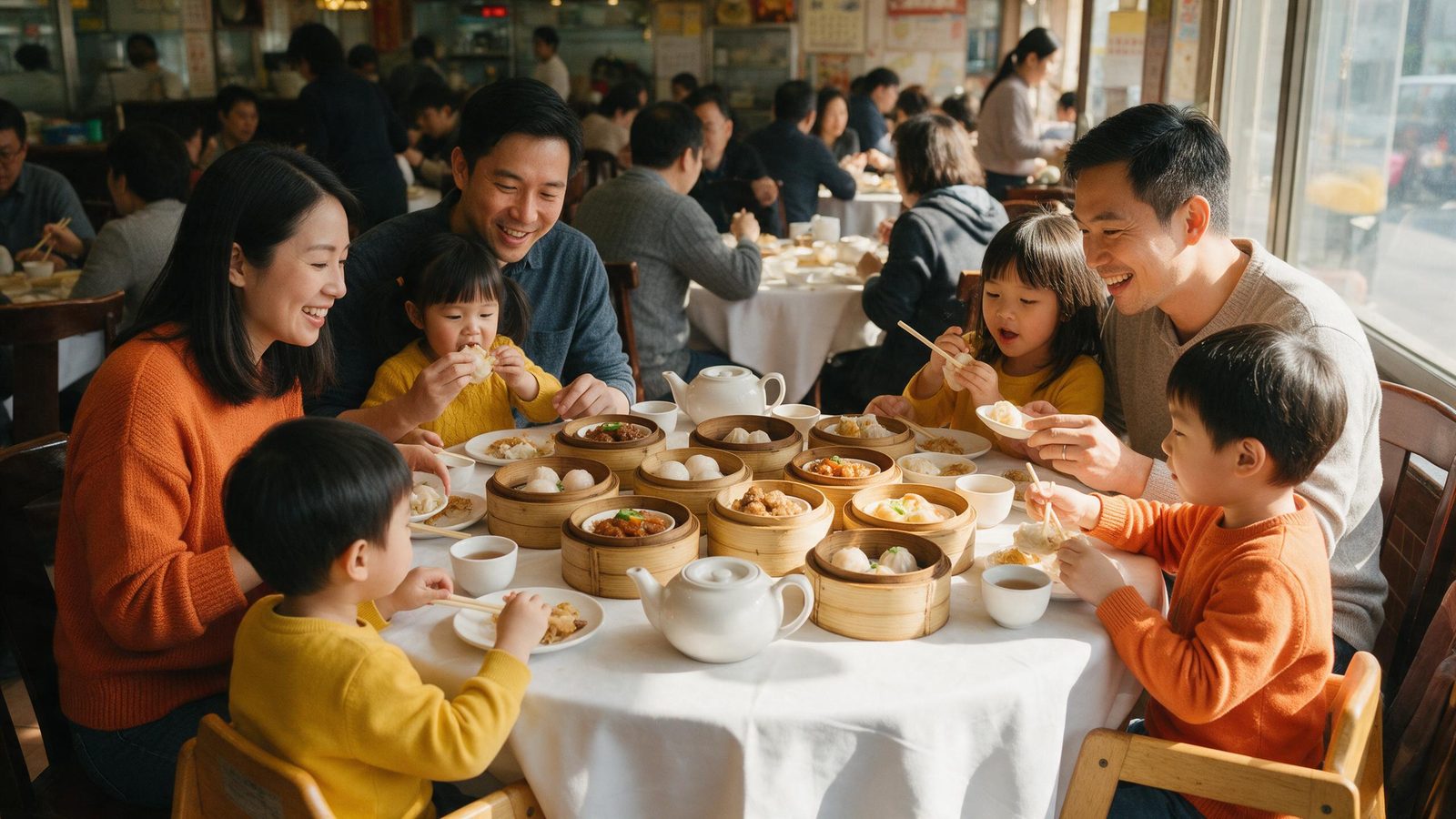
Two families go out for dim sum. One has two adults and three children, the other has two adults and a baby. Splitting by person would be odd. Splitting equally might not be fair either.
Split by household
The simplest way for families is to treat each household as one unit. Then decide how many shares each household has.
Common ways to count shares
- Adults as one share, children as half. Babies and toddlers count as zero.
- Equal per household. If the families are of similar size and eat out together often, it evens out.
- By what was ordered. Best for large gatherings where families ordered separately.
A worked example
Two families share a dim sum lunch that costs S$192 in total.
- The Tan family: 2 adults and 3 children = 2 + 1.5 = 3.5 shares
- The Lim family: 2 adults and a baby = 2 shares
- Total: 5.5 shares, so one share is about S$34.91
The Tans pay S$122.18 and the Lims pay S$69.82.
Grandparents and guests
At family gatherings, grandparents are often treated as guests. Add their share to the households that are paying, as you would for a birthday guest.
Rotate who hosts
For regular family meals, many families take turns paying for the whole table. Keep a simple note of who paid and roughly how much, so it stays balanced over the year.
Keep it relaxed
Family meals are about being together. Agree on the method once, and use it every time so nobody has to discuss money at the table.
With Perpax
Perpax, coming soon from Goldmend Money, will let you set shares for each person or household, so families with children split fairly.
General information, not financial or legal advice. Figures are examples. Check your receipt and official sources.