
Journal · Housemates
Shared groceries and household items: what to split and what to keep separate
What to split and what to keep separate, and three ways to handle shared household buys.
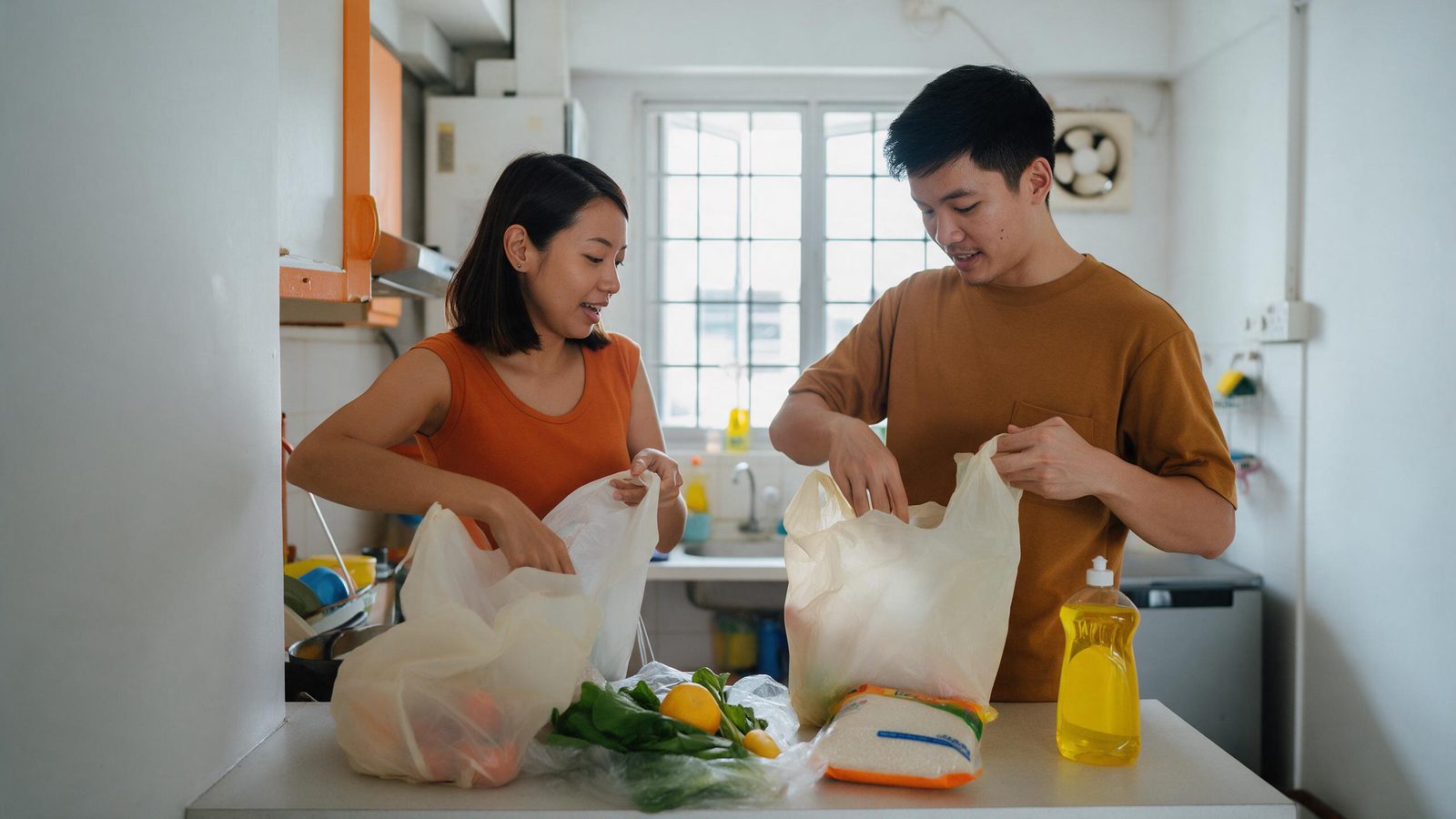
Dish soap, toilet paper, rice, cooking oil. Shared households go through them fast, and someone always seems to buy them more often.
Draw a clear line
Most housemates do well with two lists.
Shared: cleaning products, toilet paper, bin bags, cooking basics such as rice, oil, salt and sauces, and anything everyone uses.
Personal: your own food, snacks, drinks and toiletries.
Write the lists down and stick them on the fridge, or keep them in a shared note.
Three ways to handle shared buys
- Take turns. Each person buys the shared items in turn. Easy, but it only works if costs are similar each time.
- Keep a running tab. Whoever buys records the amount. Settle the balance every month.
- Shared kitty. Everyone puts in a fixed amount each month, such as S$30, and shared items are paid from it.
The running tab is the fairest when people shop at different times.
A worked example
In one month, three housemates record their shared buys: Lina S$64, Omar S$22, Wei S$34. That is S$120 in total, or S$40 each. Omar pays Lina S$18 and Wei pays Lina S$6, and the month is square.
Cooking together
If you cook together often, split the groceries for those meals equally and keep everything else personal. It keeps the shopping trip simple.
Small amounts add up
Do not skip recording a S$4 bottle of dish soap. Small amounts are the ones that build quiet resentment over a year.
With Perpax
Perpax, coming soon from Goldmend Money, will keep a shared household list with a monthly settle-up that works out who pays whom.
General information, not financial or legal advice. Figures are examples. Check your receipt and official sources.