
Journal · Travel
Splitting a holiday in different currencies
Pick one home currency, agree on an exchange rate and watch card fees when a trip spans several currencies.
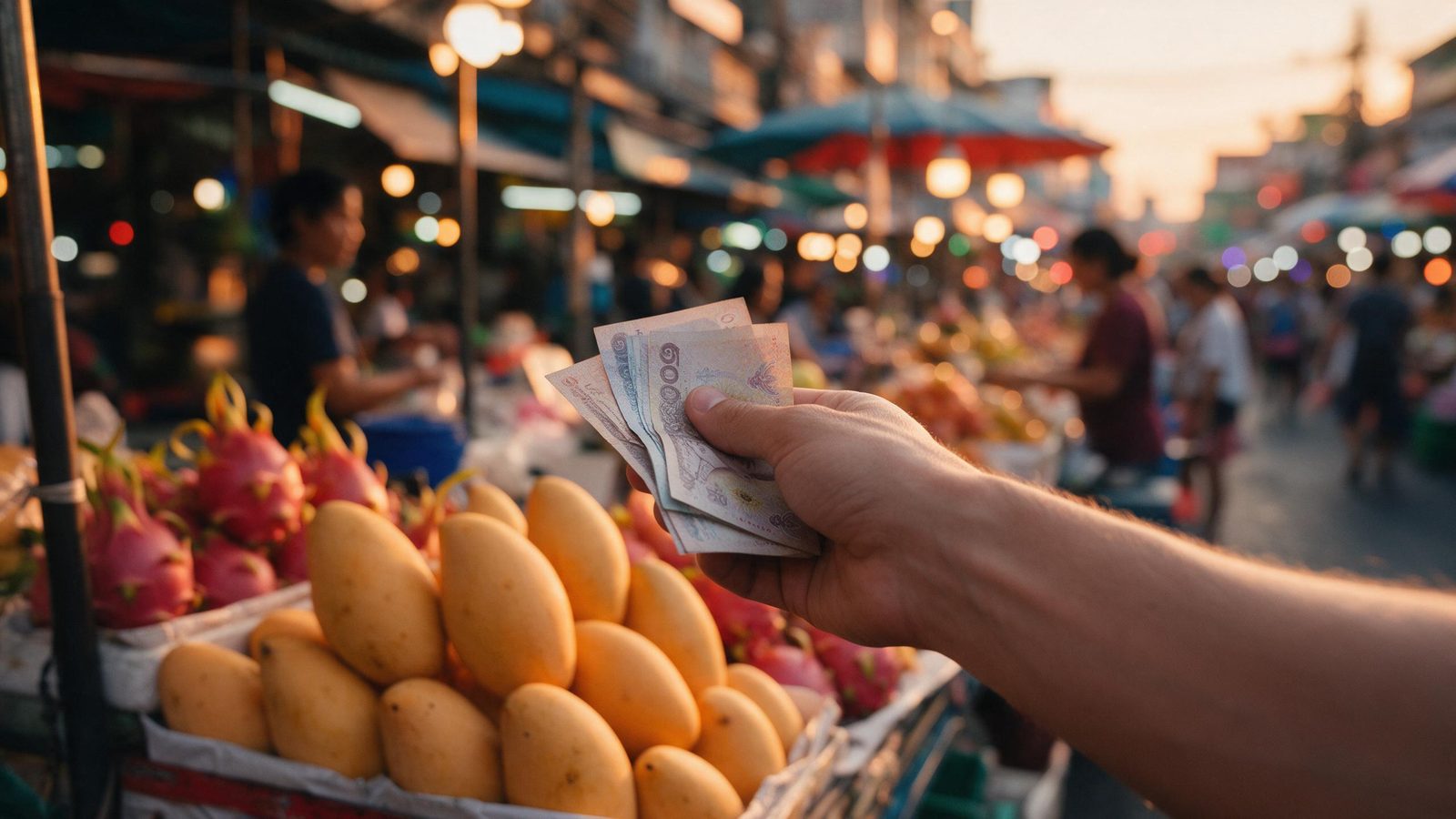
Your group lands in Bangkok. One friend paid for the hotel in S$, another booked the boat trip in baht, and dinner on the last night went on a card in ringgit. How do you settle up without a spreadsheet?
Pick one home currency
Choose the currency most of the group gets paid in. For a Singapore group, that is S$. Every cost is turned into S$ before you split it, so everyone settles in the same money.
Which exchange rate?
There are three sensible choices. Agree on one before the trip.
- The rate on the day of each purchase. The fairest, because it matches what each payer's bank roughly charged.
- One fixed rate for the whole trip. The simplest. Pick a rate on the day you leave and use it for everything.
- What the payer's bank actually charged. The most exact, but you only know it once the statement arrives.
For most friend groups, the day's rate is fair and good enough.
A worked example
For example, say S$1 buys about 25 baht on the day. A boat trip for 4 people costs 6,000 baht, paid by Jess. That is about S$240, so each person owes Jess about S$60.
The rate here is only an example. Use the real rate on the day of your trip.
Watch the card fees
Paying by card abroad can add a foreign transaction fee, and choosing to pay in your home currency at the terminal often gives a poor rate. Pay in the local currency when the terminal asks. If the fees were large, the group can share them like any other cost.
Cash kitties
Many groups put cash into a shared kitty for street food and taxis. Count the kitty at the end, split any leftover, and record it so it does not get forgotten.
With Perpax
Perpax, coming soon from Goldmend Money, will record each cost in the currency you paid, use the day's rate, and show the whole trip in your home currency.
General information, not financial or legal advice. Figures are examples. Check your receipt and official sources.